Single-Core Compatibility Mode
Single-Core Compatibility Mode enables migration of existing PxMM (first-generation) projects to the PCMM2G platform.
- Configuration: This setting is enabled for each project.
- Execution Behavior: This mode forces the motion engine and PLC virtual machine to run on the same core, emulating single-core controller behavior.
- No Code Changes Required: Applications originally designed for single-core execution run without modification.
- Diagnostics Support and Persistence: A warning message is logged at project startup when the compatibility mode is enabled to aid in diagnostics.
- This setting persists across firmware updates and controller backup/restore operations.
- Customer Benefit: Allows continued use of existing applications without the need for immediate code refactoring, easing the transition to multi-core platforms.
Limitations and Guidelines
This mode preserves compatibility with legacy applications but exhibits operational characteristics that differ from both first-generation controllers and native PCMM2G multi-core operation.
Operational Behavior
In Single-Core Compatibility Mode:
- The PCMM2G controller does not interrupt PLC code execution when the next motion cycle begins.
- The controller continues executing PLC logic until completion, regardless of cycle time boundaries.
When PLC execution exceeds the motion cycle time:
- EtherCAT communication is delayed until PLC logic completion.
- The controller reports late Tx/Rx messages.
- Distributed clock synchronization is affected.
- E30 errors are likely to occur.
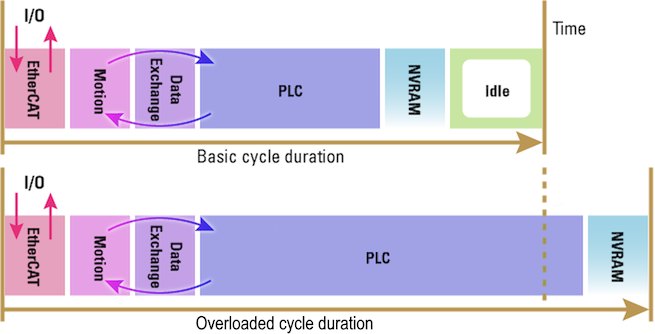
Figure 1: Example: SCCM Overloaded Cycle
Impact on Migrated Applications
The PCMM2G provides significantly higher processing performance than first-generation hardware.
Applications that operate within timing constraints on PxMM controllers typically execute with greater timing margin on PCMM2G hardware.
Timing issues may occur when:
- Additional PLC logic increases execution time beyond the original application scope.
- EtherCAT cycle time settings are aggressive relative to total workload.
- Complex computational tasks are added to migrated code.
Application Guidelines
Single-Core Compatibility Mode is appropriate for:
- Migration of existing PxMM controller projects to PCMM2G.
- Applications where minimizing code modification is required.
- Maintaining legacy application behavior during hardware transition.
Multi-core compatible execution is recommended for:
- New projects developed on PCMM2G hardware.
- Applications requiring significant functional expansion.
- Projects where maximum performance and scalability are required.
Recommendations
Kollmorgen strongly recommends updating PLC code for multi-core compatibility when migrating existing code to new projects that increases controller workload.
Mitigation Options
If timing constraints are encountered in Single-Core Compatibility Mode, consider these mitigation options:
- Code Optimization: Reduce computational complexity in PLC logic.
- Update the Program Cycle settings: See Program a Multi-Core Controller.
- Cycle Time Adjustment: Increase EtherCAT cycle time if application requirements allow it.
- Multi-Core Migration: Update application to use multi-core compatible guidelines.
- See Define the PLC Cycle.
See Also


