
 Function
 A function calculates a result according to the current value of its inputs. A function has no internal data and is not linked to declared instances. - Get the identifier of a Signal resource.
Inputs
|
Input |
Data Type |
Range |
Unit |
Default |
Description |
|---|---|---|---|---|---|
|
SIGNAL |
STRING |
|
|
|
Name of the signal resource. Must be a constant value. |
|
COL |
STRING |
|
|
|
Name of the column within the signal resource. Must be a constant value. |
Outputs
|
Output |
Data Type |
Range |
Unit |
Description |
|---|---|---|---|---|
|
ID |
DINT |
|
|
ID of the signal to be passed to other blocks. |
Remarks
- Some blocks have arguments that refer to a signal resource.
- For all these blocks, the signal argument is materialized by a numerical identifier.
FBD Language Example
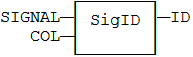
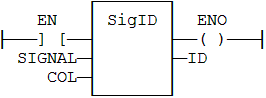
FFLD Language Example
IL Language Example
Op1: LD
SigID 'FirstColumn'
ST ID
ST Language Example
ID := SigID ('MySignal', 'FirstColumn');
See Also


